

How to protect yourself from lightning in a thunderstorm
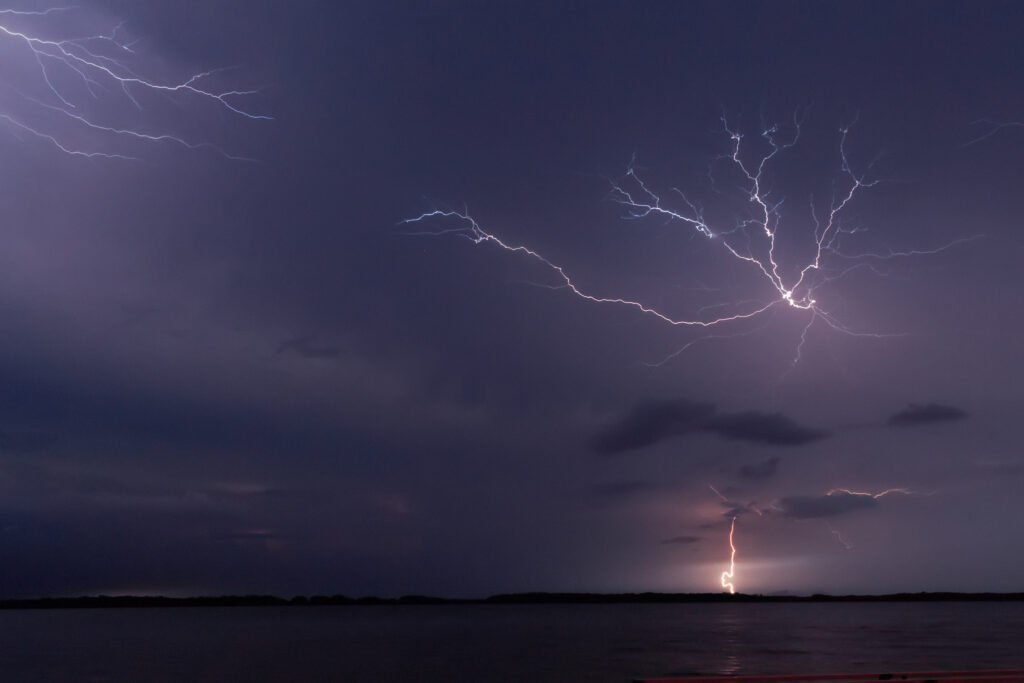
Lightning is one of the few natural hazards that can reach you indoors, outdoors, near water and on open ground. In the tropics, where storms build quickly and often, knowing what to do in the first minutes matters more than almost any other safety habit.
The core rule has not changed in decades: when thunder roars, go indoors. If you can hear thunder, you are already close enough to be struck. Here is how to act before, during and after a storm.
Before the storm reaches you
- Check the forecast before outdoor work and watch the sky for fast-building, towering clouds.
- Identify the nearest fully enclosed building or a hard-topped vehicle in advance, know where you will go.
- Finish high-exposure tasks early: rooftops, cranes, masts, open fields and water are the worst places to be caught.
During the storm
Once thunder is audible, treat the area as dangerous until 30 minutes after the last rumble. Inside a building, stay away from windows, plumbing and anything wired to the outside.
- Avoid corded phones, wired equipment and anything plugged into a wall during the peak of the storm.
- Keep clear of water, taps, showers and sinks can carry a surge through the plumbing.
- If you are caught outside with no shelter, move off high ground, away from isolated trees and metal structures, and make yourself low without lying flat.
Personal safety habits reduce risk to people. They do nothing for the building, the equipment inside it, or the hours of downtime a single strike can cause.
Where engineered protection begins
Behavior protects people. It does not protect a telecom tower, a fuel depot, a port crane or a control room full of electronics. That is the job of a properly engineered lightning protection system.
DINNTECO DDCE systems work on a different principle from conventional rods. Instead of inviting a strike and routing it to ground, they compensate the electrostatic field around a structure so the upward leader, the spark that completes a strike, never forms in the first place. A single head can shield a radius of up to 100 meters, with no power, no moving parts and a 20-year service life.
For any site where a strike means real cost, lost data, damaged plant, or a safety incident, the right answer is to combine sensible storm behavior with a protection system sized to the structure.